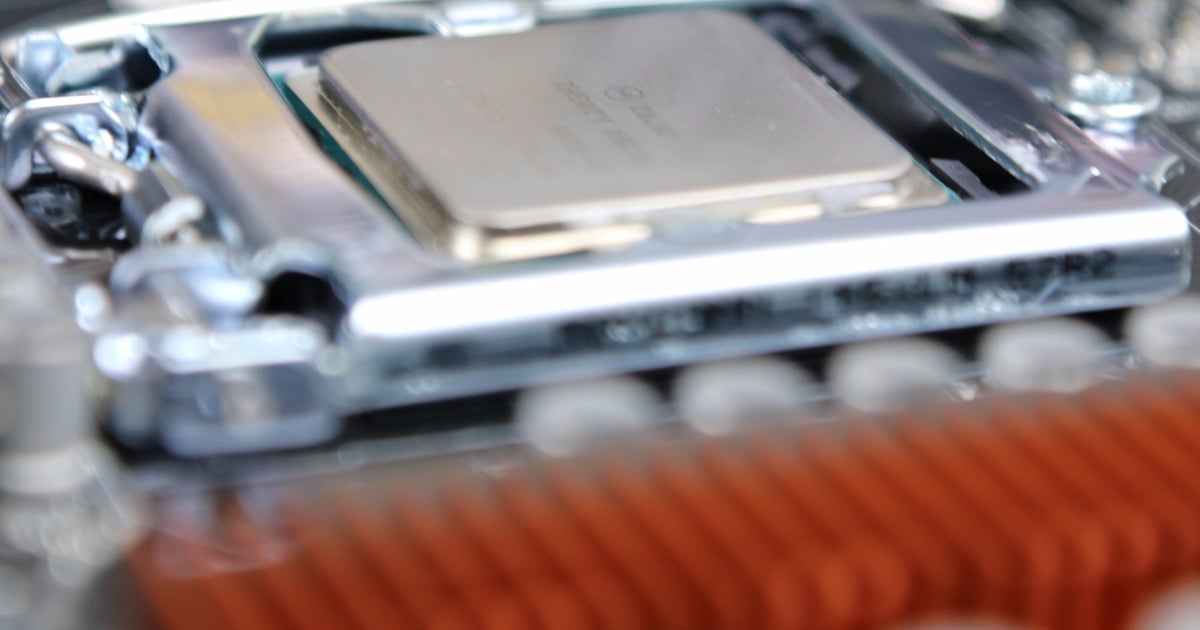
This week noticed two revelations for AMD’s classic K7-based Athlon processors from the late 90s and early 2000s: They bore chip artwork depicting the state of Texas and a revolver per Fritzchens Fritz, and AMD changed its inner codename system to avoid a possible lawsuit in accordance to AMD reminiscence engineer Phil Park.The detailed pictures of Athlon’s chip artwork come courtesy of Fritzchens Fritz, who’s well-known for taking pictures and x-rays of laptop {hardware}. He photographed a Pluto-based Athlon CPU, which got here out in late 1999 and powered fashions clocking from 550MHz to 800 MHz. A nook of the CPU is etched with the borders of Texas and a revolver, comparable to the well-known Colt Single Action Army. These pictures had been most likely included to honor or not less than reference AMD’s Austin, Texas department.These pictures garnered a lot consideration, together with from veteran AMD engineer Phil Park, who revealed extra particulars of Athlon’s historical past as a facet observe. It appears the preliminary Athlon CPUs had codenames based mostly on a Greco-Roman theme. Athlon means contest in Ancient Greek, Pluto is the Roman equal of Hades, and Orion (the primary chip for 900MHz and 1 GHz Athlons) is a determine in Greek mythology.In 2000, AMD shifted to totally different names, beginning with Thunderbird for the third sequence of Athlon CPUs, Mustang for a canceled workstation-focused Athlon, and Spitfire for the primary Duron chips. According to Park, the brand new theme was supposed to be vehicles, with the codenames based mostly on the Ford Thunderbird, Ford Mustang, and Triumph Spitfire. There was additionally the Camaro chip for Duron CPUs, which was a reference to Chevrolet Camaro vehicles.However, the engineer says there was a rumor that car companies, undoubtedly together with Ford, Chevrolet, and BMW (which now owns the Triumph trademark), had been conscious of what AMD was doing. Fearful that these massive trade giants may begin a trademark struggle over one thing so simple as inner codenames, AMD determined to to change course. Though this might sound overly cautious, again then AMD was a tiny firm of simply over 10,000 staff, whereas Ford alone had over 300,000 staff.”So it grew to become horses,” in accordance to Park. After Thunderbird, AMD launched Palomino-based Athlon XP CPUs, adopted by Thoroughbred. Duron’s Camaro was succeeded by Applebred, which is not an precise horse breed however is on the identical wavelength as Thoroughbred. Thorton and then Barton adopted Palomino, and it is not fully clear what the primary one is predicated on, however the second may be named after Sir Barton, the primary horse to win the American Triple Crown.Though these chips are throughout 20 years previous now, it appears that is the primary time these particulars have emerged. AMD first launched Athlon and its underlying K7 structure on June 23, 1999, and it is typically thought of one of the corporate’s greatest CPUs ever. Athlon was the primary CPU ready to go head-to-head with Intel’s CPUs, arguably beating the Pentium III lineup of the time. With K7, AMD even hit the 1GHz mark earlier than Intel did (by per week or so), and the structure went on to be fairly aggressive even towards Pentium 4 till its substitute by K8 and Athlon 64 in 2003.
https://www.tomshardware.com/pc-components/cpus/amds-classic-athlon-cpus-emblazoned-with-etchings-of-texas-and-revolvers-codenames-may-have-changed-to-avoid-upset-car-companies