When it involves digicam tech, future tendencies have historically been dictated by the ‘smarter, sooner, lighter’ doctrine. But as the digital single-lens reflex (DSLR) reaches maturity, the place will digicam designers take us subsequent?
Ask any skilled photographer what they need from their digicam of the future and you’ll assure that the reply can be a variation on the theme of increased decision and larger file sizes. In different phrases, extra pixels on the digicam’s sensor. It’s hardly a brand new request: ever since the Kodak Microelectronics Technology Division developed a 1.3MP charge-coupled system picture sensor in 1986 and built-in it with a typical Canon F-1 movie digicam physique, photographers have been clamouring for extra from their digital single-lens reflex (DSLR) cameras. The equation has all the time been ‘larger sensors plus extra pixels equals higher high quality’.
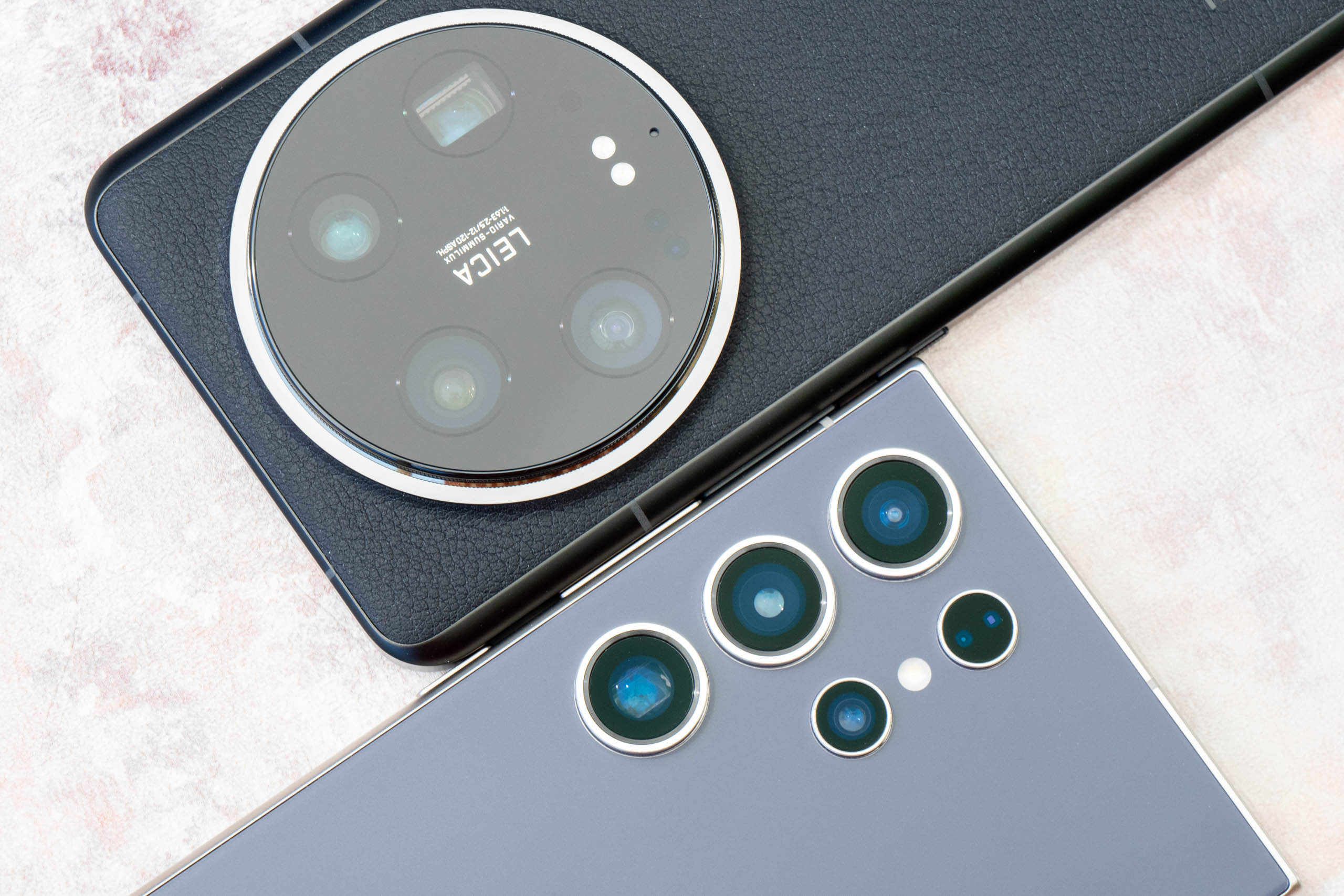
And they obtained it. Today, at the skilled excessive finish of the spectrum, Hasselblad H system cameras (that may set you again tens of 1000’s of kilos) ship 400MP file output. Meanwhile in the shopper area, horizon-scanners are already forecasting that Apple’s forthcoming iPhone 14 Pro launch will, due to a course of generally known as ‘pixel binning’, successfully serve up 48MB from what’s basically a free on-board digicam. If the rumours are true, the iPhone 14 Pro will ship extra pixels than Nikon’s D850 prosumer DSLR, at the moment retailing at round £2,500. As one analyst stresses, the advantages to the end-user are that “pixel binning is a method for producers to supply hundreds of megapixels with out adversely affecting low-light efficiency”. But that’s hardly the level. The wider situation is that such gadgets may trigger big disruption in the market, with Apple sending a powerful sign that the days of the trusty DSLR workhorse slung round our necks could possibly be over.
It was the late American futurist Alvin Toffler who mentioned that one of the functions of expertise evolution is to supply devices which are smarter, cheaper and lighter. And whereas we will go into ‘data overload’ (Toffler’s time period) about what chip developments will imply for picture decision and pixel rely, Moore’s Law implies that immediately’s designers are all the time going to supply ‘higher’ cameras tomorrow. Advances in smartphone digicam specs imply that the on a regular basis person will see a narrowing of high quality differentiation between pictures taken on their hand-held system and the cumbersome DSLR that prices a lot extra.
Image credit score: Canon
“Is the DSLR useless?” asks Jason Parnell-Brookes on his Fstoppers weblog. Perhaps experiences of its demise are exaggerated, he says, as a result of Canon has introduced that it’s going to proceed to fabricate DSLR items whereas there’s a market for them. But the actual menace to the DSLR isn’t the smartphone, however ‘mirrorless’ cameras that may compete on picture high quality (which smartphones wrestle to), whereas being cheaper and lighter (if not that a lot smarter).
Where mirrorless cameras actually rating is in the title. By casting off the clunky mirror part, mirrorless cameras can ship a sooner capturing pace (as much as 30 frames per second), whereas their downsides are negligible. In the previous, smaller sensors (APS-C) and sluggish digital viewfinders hindered the mirrorless takeover. But as a latest TechRadar comparability of the genres factors out, extra highly effective chips now imply that “the roles are considerably reversed. The newest and biggest expertise is now present in mirrorless cameras. If you’re an entry-level person, you may be extra more likely to go for a less expensive DSLR, given they continue to be the most reasonably priced strategy to get a digicam with a built-in viewfinder.”
Where we’re at the second, says skilled photographer Thomas Kettner, is a developmental section the place “new issues occur in smaller steps. There remains to be improvement in pace, high quality and efficiency.” But he thinks that this trio of elements – that appears similar to Toffler’s axiom about the function of expertise – gained’t ship a lot in the method of departures from the trajectory. In a decade’s time, “technology-wise it will likely be not a lot totally different to now. Maybe cameras will turn into smaller, even sooner. Maybe there can be no extra still-photography: solely movement footage” from which the photographer of tomorrow, “will select a body and print a single fraction of a second for a nonetheless picture”.
But not everybody agrees with Kettner, largely as a result of the chips inside cameras are solely half of the story. And but, outdoors of the digital revolution, pictures’s progress has extra in frequent with geological time than the white warmth of expertise.
One elementary facet of digicam expertise that we are likely to assume doesn’t change is the lens, regardless of the apparent advances ushered in by autofocus (launched in 1978 with the Polaroid SX-70 SONAR OneStep). The clear materials has resolutely remained invariably both glass or acrylic, with commentators stating that “the majority of immediately’s lenses are based mostly on the similar bodily ideas, and embrace the similar primary limitations, as the first prototypes invented in the sixteenth century”, after they have been utilized in telescopes. This comes from a analysis paper revealed by Chalmers University of Technology, Sweden, detailing a brand new expertise for making “synthetic supplies generally known as ‘metasurfaces’, which consist of a large number of interacting nanoparticles that collectively can management mild”. It could also be a way forward however, the authors speculate, if metasurfaces take off, digicam lenses may turn into “1000’s of instances thinner and considerably much less resource-intensive to fabricate”.
But if lenses aren’t going to vary any time quickly, there’s loads of hypothesis about what may. One such advance could possibly be the demise of the shutter launch button. Arguably, this expertise died with mechanical cameras as a result of the time period refers to the analogue mechanism that was ‘cocked’ by one lever and ‘launched’ by one other, as a way to expose the movie. On digital cameras, that is now merely a digital swap, though that too could possibly be a factor of the previous, with indications that designers are engaged on voice-command picture seize and even eye-movement actuation.
Kyle Shurman of Lifewire thinks that this expertise could possibly be usefully built-in into cameras the place “photographers may wink or use a voice command to inform the digicam to document a picture”, though the benefits on this context are unclear. Stronger potential lies in hands-free picture seize on smartphones or good glasses. This might not be as far-fetched because it sounds, with experiences of Sony having patented a contact lens “that comes with an built-in miniature digicam module and all its parts, equivalent to picture sensor, lens, processor, storage and even a wi-fi module to switch photos to a smartphone or different related system”.
Something which may make its method on to our cameras sooner is the substitute of the shutter button with a touchpad, at the moment beneath improvement by Canon. While conventional shutter launch buttons are restricted in perform, Canon’s substitute is ready to do greater than setting focus and snapping pictures. PetaPixel’s Michael Zhang says: “The touchpad may have built-in sensors that may detect whether or not a photographer is performing a press or swipe motion and could possibly be used to do various things relying on what you’re at the moment doing with the digicam.”
This opens up a performance the place advanced changes equivalent to spot metering and publicity compensation could be made with out the photographer taking their eye from the viewfinder. As Zhang says, there’s no assure that this improvement “will ever see the mild of day. But it’s attention-grabbing to know that the brains over at Canon are reimagining each facet of digicam design: even the tried-and-true shutter button.”
Even although the world of digicam design is a conservative one, the place alterations to the perform of one button is thought to be noteworthy, the market will not be proof against expertise megatrends.
When it involves connectivity, immediately’s fragmentary nature of how cameras talk will ultimately mimic the smartphone. There can be no must tether it to a laptop computer to obtain photos. Files will transmit over comms networks, permitting folks in a number of areas to see what you’re capturing in actual time. On-board synthetic intelligence will transfer on from focus and publicity settings to selecting your finest pictures, whereas immersive pictures will imply that there can be a convergence between 360-degree, VR and computational pictures. As the innovation wheel goes full circle, one of the earliest of all the Victorian image-making applied sciences – 3D or stereoscopic pictures – will lastly discover an software because it makes its method into the smartphone’s digital orbit.
As the media expertise analyst IBC365 observes, the route the on a regular basis shopper digicam is heading in could be described in 5 phrases. When it involves sensor measurement, larger is best. Paradoxically, these sensors will discover a dwelling in cameras which are smaller in bodily measurement and value. They can even be sooner in phrases of their connectivity, whereas producing increased high quality photos by way of the use of smarter controls.
Sign as much as the E&T News e-mail to get nice tales like this delivered to your inbox daily.
https://eandt.theiet.org/content/articles/2022/02/change-of-focus-for-photography/